
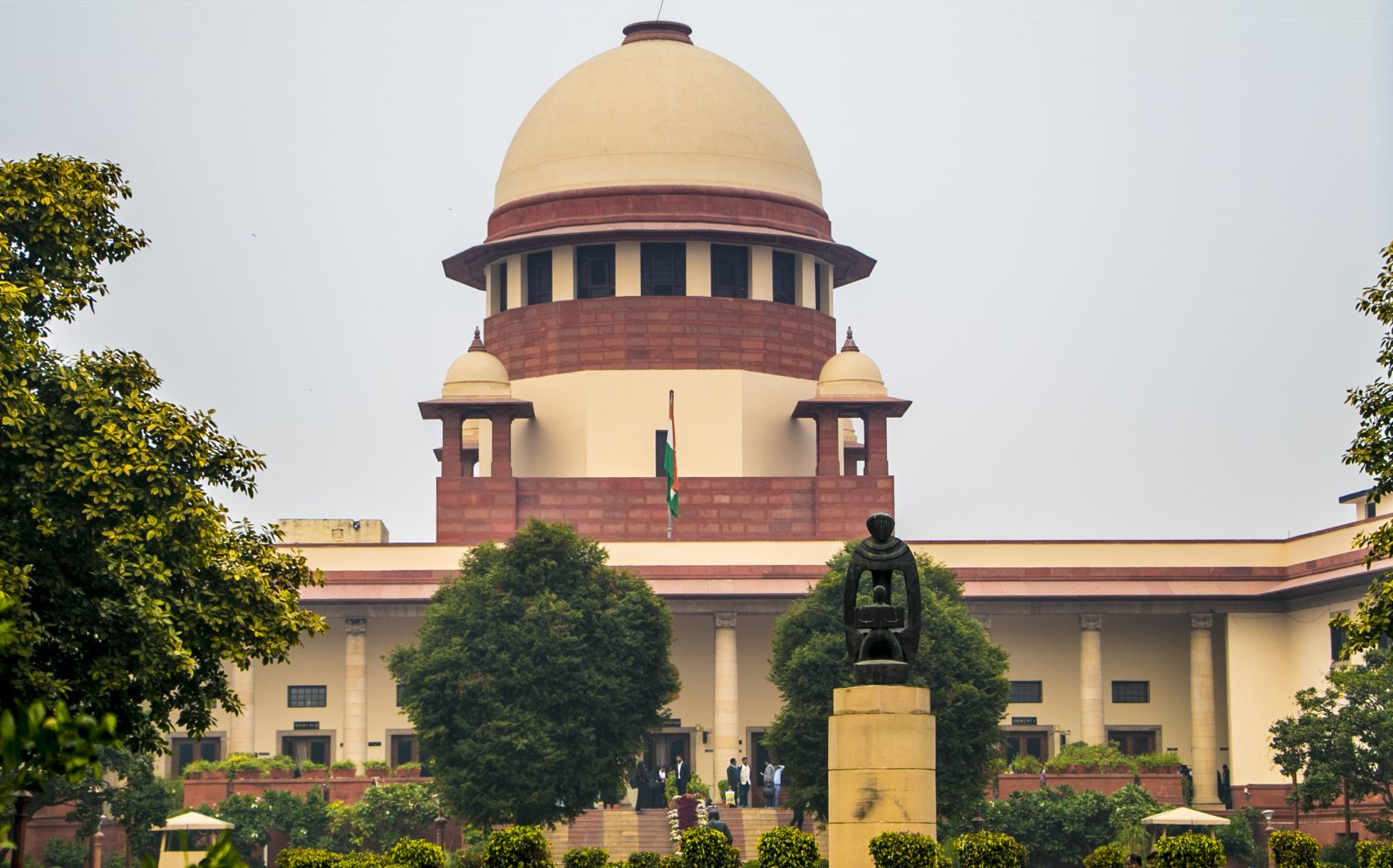
Legal Heir’s Remedy Against Arbitral Award Lies Under Section 34, Not Article 227: Supreme Court Clarifies
Supreme Court in V.K. John vs S. Mukanchand Bothra (2026) held that legal heirs challenging an arbitral award must proceed under Section 34 of the Arbitration Act and not Article 227 of the Constitution.
Case Title: V.K. John vs S. Mukanchand Bothra & HUF (Died) Represented by LRs & Ors.
Case No: Civil Appeal (2026) arising out of SLP (C) No. 16162 of 2023
Court: Supreme Court of India
Judges: Justice Sanjay Karol & Justice Vipul M. Pancholi
Date of Judgment: 20 April 2026
Story Behind the Case
This case began with a property dispute rooted in a sale agreement dated 20.04.2007. The agreement was executed between the respondent and one Appu John. Soon after, Appu John passed away in July 2007.
Later, arbitration proceedings were initiated in 2011 against a person claimed to be the legal representative of the deceased. An arbitral award was passed directing execution of the sale deed.
However, the real twist came when V.K. John, claiming to be the true legal heir, entered the scene. He argued that:
• He was never made a party to arbitration
• The wrong person was shown as legal representative
• He came to know about the proceedings much later
• His property rights were affected without hearing him
Instead of filing under the Arbitration Act, he approached the High Court under Article 227 of the Constitution.
High Court View
The Madras High Court dismissed his petition stating clearly that:
“When a statutory remedy exists under the Arbitration Act, invoking Article 227 is not maintainable.”
Unhappy with this, the appellant moved the Supreme Court.
Core Legal Issue
The Supreme Court framed a precise legal question:
Can a legal heir challenge an arbitral award under Article 227, or must he file under Section 34 of the Arbitration and Conciliation Act, 1996?
Supreme Court Analysis
The Court went deep into the structure of arbitration law and made it very clear:
The Arbitration Act is a complete code. Section 34 provides the only mechanism to challenge an arbitral award.
Referring to the statute, the Court emphasized:
“Recourse to a Court against an arbitral award may be made only by an application under Section 34.”
The word “only” was treated as crucial. It restricts all challenges strictly within the framework of the Act.
Legal Heirs = Parties?
This is where the judgment becomes practically important.
The Court clarified that:
• Legal representatives step into the shoes of the deceased
• Arbitration agreements do not end with death (Section 40)
• Awards bind not just parties, but also persons claiming under them (Section 35)
So logically:
If legal heirs are bound by the award, they must also get the right to challenge it — but only under Section 34.
Why Article 227 Was Rejected
The Court took a strict stand:
Judicial interference outside Section 34 is allowed only in exceptional rarity.
Article 227 cannot be used as a shortcut when a specific statutory remedy exists.
This is consistent with earlier rulings like:
• Bhaven Construction case
• Ravi Prakash Goel case
Critical Observation by Court
The Court also pointed out a contradiction in the appellant’s stand:
On one side, he claimed to be the sole legal heir.
On the other side, he denied representing the estate.
This inconsistency weakened his case significantly.
Final Judgment
The Supreme Court held:
• Remedy lies under Section 34 of Arbitration Act
• Article 227 cannot be invoked in such cases
• High Court order is correct
• Appeal dismissed
However, the Court gave one practical relief:
Limitation to file Section 34 petition will start from the date of this judgment.
Legal Impact (Practical Takeaways)
This judgment is very important for real-world litigation:
• Legal heirs cannot bypass arbitration law procedures
• Section 34 is mandatory route for challenge
• High Courts cannot be used as alternate forum
• Arbitration law is strictly self-contained
For advocates, this means:
Wrong forum = case dismissal
Professional Insight (Critical View)
This ruling strengthens arbitration efficiency but also raises a practical issue:
What if the legal heir was genuinely unaware of proceedings?
The Court solved it partially by relaxing limitation — but not procedural compliance.
So strategy matters more than sympathy.
Conclusion
The Supreme Court has drawn a hard boundary:
Arbitration disputes must stay within arbitration law.
No constitutional shortcuts. No procedural bypass.
If you are a legal heir affected by an arbitral award — your only weapon is Section 34.
Reference Judgment
Full Judgment PDF:
V.K. John vs S. Mukanchand Bothra (2026 INSC 393)
:contentReference[oaicite:0]{index=0}
Explore More Legal Articles
Arbitration Law Basics in India
Scope of Article 227 Explained
Civil Procedure Remedies Guide
Legal Services
Arbitration Case Handling
Property Dispute Solutions
Civil Litigation Support
Location-wise Internal Links
- Advocate Office Services in Vandavasi (Vandavasi)
- Delhi Advocate Office Services at Vandavasi (Vandavasi)
- Lawyer Office Services in Vandavasi (Vandavasi)
- Document Writer Services in Vandavasi (Vandavasi)
Related City Articles
- Supreme Court Pushes Motor Insurance Reform, Keeps Occupant Cover Protection Under Package Policies | 4 August 2026
- Madras High Court: Cooperative Society Can Withhold Terminal Benefits While Surcharge Recovery Is Pending | 4 August 2026
- Calcutta High Court Says ROC Complaint Against Independent Professional Must Plead Mens Rea and Stay Within Limitation | 1 August 2026
- GST on Online Gaming, Fantasy Sports and Casinos Upheld: Supreme Court Restores Gameskraft Show Cause Notices | 2026 INSC 595
Attached PDF
File size: 395 KB