
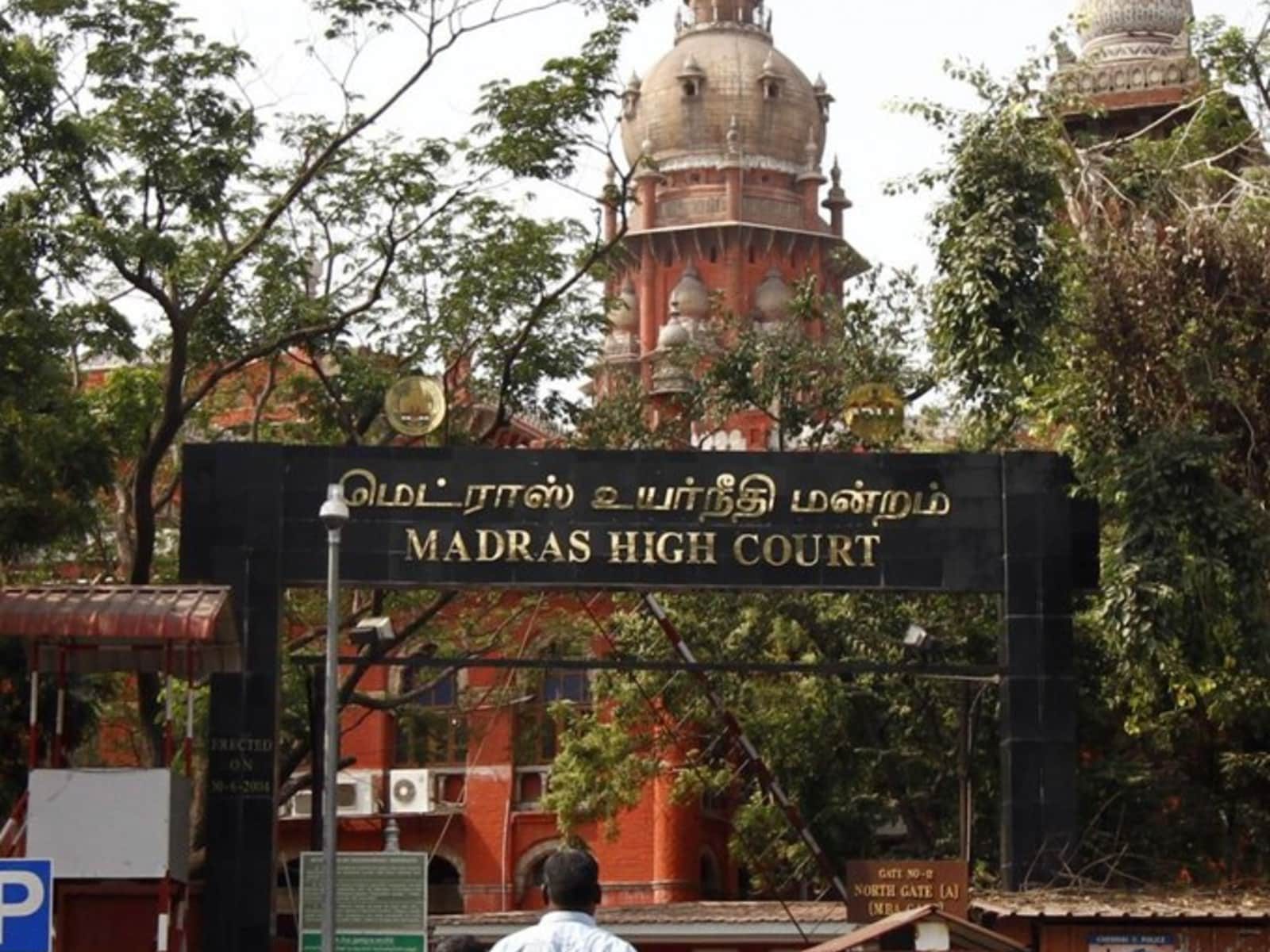
Madras High Court Sets Aside Land Acquisition Compensation Award Over Outdated Valuation
Madras High Court sets aside arbitral award in land acquisition case, holding reliance on outdated guideline value as illegal and orders fresh compensation determination.
Land acquisition cases often revolve around one core issue — what is the fair value of the land?
But when authorities rely on outdated data and fail to properly evaluate evidence, the entire compensation process becomes questionable.
This is exactly what happened in a recent decision of the Madras High Court involving land acquired for a National Highway project.
The Court stepped in and made it clear — fair compensation is not optional, it is a legal and constitutional right.
Background of the Case
The appellant, a landowner, owned agricultural land situated in Nangilikondan Village, Gingee Taluk.
For the construction of a Toll Plaza under National Highway No.66, the land was acquired by the National Highways Authority of India (NHAI).
The acquisition was carried out under the provisions of the National Highways Act, 1956.
Following acquisition, the Competent Authority determined compensation at:
- ₹50 per sq.ft.
- With 50% deduction towards development charges
This immediately raised concern for the landowner.
According to him, the land had much higher value due to its location and development potential.
Challenge Before Arbitrator
Unhappy with the compensation, the landowner approached the District Collector acting as Arbitrator.
The expectation was simple — a fair reassessment based on actual market conditions.
However, the outcome was disappointing.
The Arbitrator:
- Removed the 50% development deduction
- But retained the same ₹50 per sq.ft. valuation
No detailed enquiry. No proper evaluation of evidence.
This forced the landowner to take the matter further.
Proceedings Before District Court
The landowner filed a petition under Section 34 of the Arbitration and Conciliation Act.
The argument was clear:
- The compensation was based on outdated guideline value
- Relevant documents were ignored
- Proper enquiry was not conducted
Despite these objections, the District Court dismissed the petition and upheld the arbitral award.
This led to the present appeal before the High Court. :contentReference[oaicite:0]{index=0}
Key Argument by the Landowner
The landowner’s case was based on a strong factual foundation.
He argued that:
- The land was located near National Highway
- It had high commercial and residential potential
- Guideline value had been revised to ₹120 per sq.ft. in 2012
Yet, authorities relied on an old value from 2007.
Even with normal market appreciation, the valuation used was unrealistic.
He also highlighted:
- Failure to consider documentary evidence
- Non-award of statutory benefits like solatium and interest
Stand of the Authorities
The respondents defended the award stating:
- Valuation was based on sale statistics for the relevant period
- The Arbitrator had already provided relief by removing development deduction
- No sufficient evidence was produced to justify higher value
However, they made one important concession:
They agreed that solatium and interest must be granted as per law.
What the High Court Examined
The High Court focused on the legality of the arbitral award and the process followed.
It examined:
- Whether proper enquiry was conducted
- Whether correct guideline value was used
- Whether evidence was properly considered
The Court also reiterated an important legal principle:
Interference in arbitration is limited — but not when there is patent illegality.
Major Findings of the Court
1. Use of Outdated Guideline Value
The Court found that authorities relied on guideline value from 2007 instead of considering the updated value of 2012.
This directly affected the fairness of compensation.
2. Lack of Proper Enquiry
The Arbitrator failed to conduct a meaningful enquiry.
Instead of independently assessing market value, the earlier determination was simply repeated.
This approach was held to be legally flawed.
3. Failure to Consider Evidence
The Court noted that relevant materials and documents were not properly evaluated.
This resulted in prejudice to the landowner.
4. Violation of Legal Principles
The Court emphasized that:
Fair compensation is part of the constitutional protection under Article 300A.
Any arbitrary determination violates this right.
5. Patent Illegality in Award
The cumulative effect of errors made the arbitral award unsustainable.
The District Court also failed to correct these issues under Section 34.
Final Judgment
The Madras High Court set aside:
- The arbitral award
- The order of the District Court
The Court directed:
- Fresh determination of compensation
- Consideration of correct guideline value
- Proper enquiry with opportunity to all parties
- Award of solatium and interest
The matter was remitted back to the Arbitrator for reconsideration. :contentReference[oaicite:1]{index=1}
Why This Judgment Matters
This decision is crucial for landowners and legal practitioners dealing with land acquisition cases.
It reinforces that:
- Authorities must use contemporaneous market value
- Arbitrators cannot mechanically confirm awards
- Courts will intervene in cases of clear injustice
Practical Takeaways
For Landowners:
- Always challenge outdated valuation
- Collect and present strong documentary evidence
For Lawyers:
- Focus on “patent illegality” in arbitration challenges
- Highlight failure of enquiry as a ground
For Authorities:
- Ensure transparent and updated valuation process
- Avoid mechanical confirmation of earlier awards
Conclusion
The Madras High Court’s decision sends a strong signal:
Compensation cannot be based on outdated data or casual approach.
Land acquisition affects property rights — and fairness in compensation is non-negotiable.
By ordering fresh adjudication, the Court restored balance between state power and individual rights.
FAQs
Can arbitral awards in land acquisition be challenged?
Yes, under Sections 34 and 37 of the Arbitration Act.
What is guideline value?
It is the minimum value fixed by the government for property transactions.
Why was the award set aside?
Due to reliance on outdated valuation and lack of proper enquiry.
Is solatium mandatory?
Yes, it is a statutory benefit payable in land acquisition cases.
What is the key takeaway?
Fair compensation must reflect current market value.
Internal Linking Suggestion
Read also: Land Acquisition Compensation Rules, Section 34 Arbitration Explained, Market Value Determination in Property Law.
Location-wise Internal Links
- Advocate Office Services in Vandavasi (Vandavasi)
- Delhi Advocate Office Services at Vandavasi (Vandavasi)
- Document Writer Services in Vandavasi (Vandavasi)
- Lawyer Office Services in Vandavasi (Vandavasi)
Related City Articles
- Supreme Court Pushes Motor Insurance Reform, Keeps Occupant Cover Protection Under Package Policies | 4 August 2026
- Madras High Court: Cooperative Society Can Withhold Terminal Benefits While Surcharge Recovery Is Pending | 4 August 2026
- Calcutta High Court Says ROC Complaint Against Independent Professional Must Plead Mens Rea and Stay Within Limitation | 1 August 2026
- GST on Online Gaming, Fantasy Sports and Casinos Upheld: Supreme Court Restores Gameskraft Show Cause Notices | 2026 INSC 595
Attached PDF
File size: 212 KB