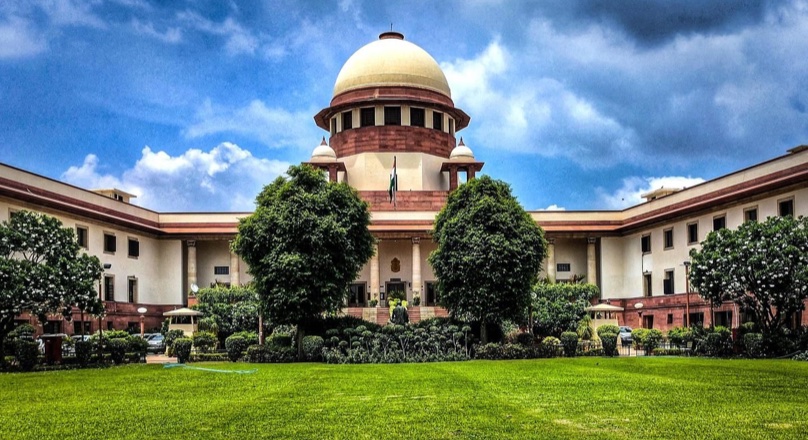
Supreme Court: Probation Can Be Granted Even in Fine-Only Cases | Milind Dhanve Case 2026
Supreme Court clarifies that probation under the Probation of Offenders Act can be granted even when punishment is only a fine
Supreme Court 2026: When Law Chooses Reform Over Punishment
Case Title: Milind S/o Ashruba Dhanve & Others vs State of Maharashtra
Case No: Criminal Appeal arising out of SLP (Crl.) No. 6843 of 2024
Court: Supreme Court of India
Judgment Date: 10 April 2026
It started like many ordinary disputes — a small altercation, a heated moment, and then a criminal case.
What followed was a legal journey that moved through the Trial Court, reached the High Court, and finally landed before the Supreme Court of India.
At first glance, the case did not look extraordinary. The accused were ultimately convicted only for minor offences under Sections 323 and 324 IPC. There was no imprisonment. Only a fine was imposed.
For most people, that would have been the end of the matter.
But law does not always end where punishment ends. Sometimes, the real question begins there.
Where the Real Issue Started
Even after conviction, a critical legal question remained unanswered — can a person be granted probation when the punishment is only a fine?
This may sound technical, but in practical terms, it decides whether a person carries the burden of a criminal conviction permanently or gets a second chance to reform.
The case reached the Supreme Court for clarity.
The Court Looked Beyond Punishment
Instead of focusing only on the conviction, the Supreme Court examined the purpose of criminal law itself.
Is the law meant only to punish? Or should it also give an opportunity to correct?
The Court made a crucial observation — punishment is not limited to imprisonment. Even a fine is a form of punishment under law.
This single observation changed the direction of the case.
The Turning Point
Once the Court accepted that a fine is also punishment, the applicability of the Probation of Offenders Act became clear.
The accused were not sent to prison. Instead, they were given a chance to reform.
One was released on probation of good conduct. Another was released after admonition.
At the same time, the Court ensured that the victim’s interest was not ignored — the fine amount was retained as compensation.
Why This Matters in Real Life
This judgment is not just about one case. It changes how minor criminal cases can be handled across India.
Many individuals, especially first-time offenders, face long-term consequences even for minor offences.
This ruling shows that courts can take a balanced approach — accountability without unnecessary harshness.
It also clears a common misunderstanding that probation is available only when imprisonment is involved.
The Supreme Court has now made it clear — that assumption is legally incorrect.
The Practical Lesson
If a case involves minor offences and the court believes reform is possible, probation can still be granted.
Even when punishment is limited to a fine, the law does not close the door on second chances.
This is where legal strategy matters. Proper representation can change the outcome significantly.
Final Thought
Law is not always about punishment. In the right case, it is about correction, balance, and giving a person a chance to move forward.
Related Legal Articles
RC Owner Liability in Motor Accident Cases
Legal Notice Complete Guide
How to Quash FIR under Section 482 CrPC
Disclaimer: This article is for legal awareness based on Supreme Court judgment.