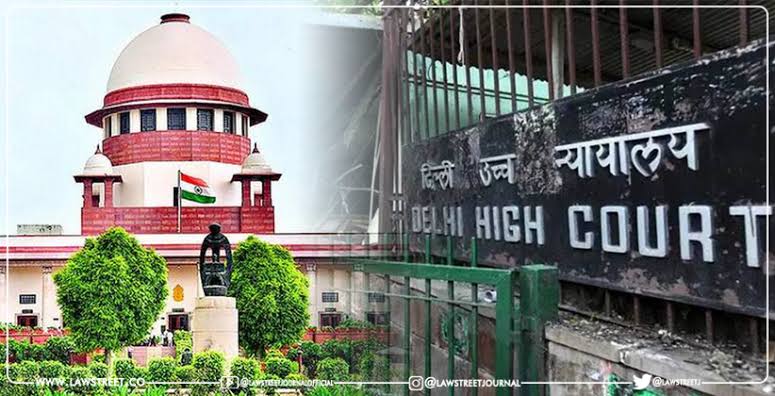
Undertrial Bail Mandatory After 1/3 Sentence Served – Delhi High Court Issues Strict Directions
Delhi High Court orders strict implementation of bail for undertrial prisoners who served one-third sentence under BNSS Section 479. Key legal insights explained.
⚖️ Bail Mandatory After 1/3 Sentence Served – Delhi High Court Issues Strong Directions
Source Judgment: 0
The Delhi High Court has delivered a significant ruling reinforcing the rights of undertrial prisoners, emphasizing that liberty cannot be denied beyond the limits prescribed by law. This judgment highlights a critical issue in the criminal justice system — prolonged incarceration of undertrial prisoners without conclusion of trial.
The case arose from a bail application filed by Rishabh Gehlot, who was accused in a cheating case. Although the allegations involved multiple instances of impersonation and financial fraud, a crucial factor before the Court was the duration of his custody. The accused had been in jail since 21.07.2023, and the maximum punishment for the alleged offence under Section 420 IPC is seven years.
The Court noted that the accused had already undergone more than one-third of the maximum possible sentence. This brought into direct application Section 479 of the Bharatiya Nagarik Suraksha Sanhita (BNSS), which provides for conditional release of undertrial prisoners who have spent a substantial portion of their potential sentence in custody.
Justice Girish Kathpalia, while hearing the matter, placed strong reliance on the Supreme Court’s directions in the case of “In Re: Inhuman Conditions in 1382 Prisons,” wherein it was clearly held that undertrial prisoners who have completed one-third or one-half of their sentence should be considered for bail. The High Court observed that despite these directions, many prisoners continue to languish in jails, raising serious concerns about compliance.
The Court also expressed dissatisfaction with the conduct of the investigating agency. It was observed that the status report filed by the police contained misleading references, particularly regarding audio recordings which were later admitted to be unrelated to the accused. Such conduct, the Court noted, undermines the fairness of investigation.
Further, the Court questioned why, out of five accused persons named in the case, only one had been arrested. It was specifically noted that another accused, who allegedly impersonated a CBI officer and played a significant role in the offence, had not been apprehended. This selective approach by the investigating agency raised serious doubts in the mind of the Court.
Another important factor considered was that charges had not yet been framed and the investigation was still ongoing. In such circumstances, continued incarceration of a first-time offender was found to be unjustified.
Taking all these aspects into account, the Court held that the benefit of Section 479 BNSS must be extended to the accused. Accordingly, the bail application was allowed, and the accused was directed to be released on bail upon furnishing a bond of ₹50,000 with surety.
Importantly, the Court went a step further and directed that a copy of the order be circulated to all District Courts, prison authorities, and legal services institutions to ensure strict implementation of the Supreme Court’s directions regarding undertrial prisoners. This transforms the order from an individual relief into a systemic directive.
This judgment is not merely a routine bail order. It serves as a strong reminder that the criminal justice system must balance investigation with individual liberty. Detaining an accused beyond legally permissible limits, especially without progress in trial, is a violation of fundamental rights.
For legal practitioners, this ruling provides a powerful precedent in bail matters, particularly where the accused has undergone substantial custody. It reinforces that statutory provisions like Section 479 BNSS are not optional but mandatory in appropriate cases.
In conclusion, the Delhi High Court has reaffirmed a fundamental principle — justice delayed cannot become liberty denied.